
Cameron Koch · 20 September 2026
Navigating Cross-Platform Data Sync Challenges in Modern Research Workflows
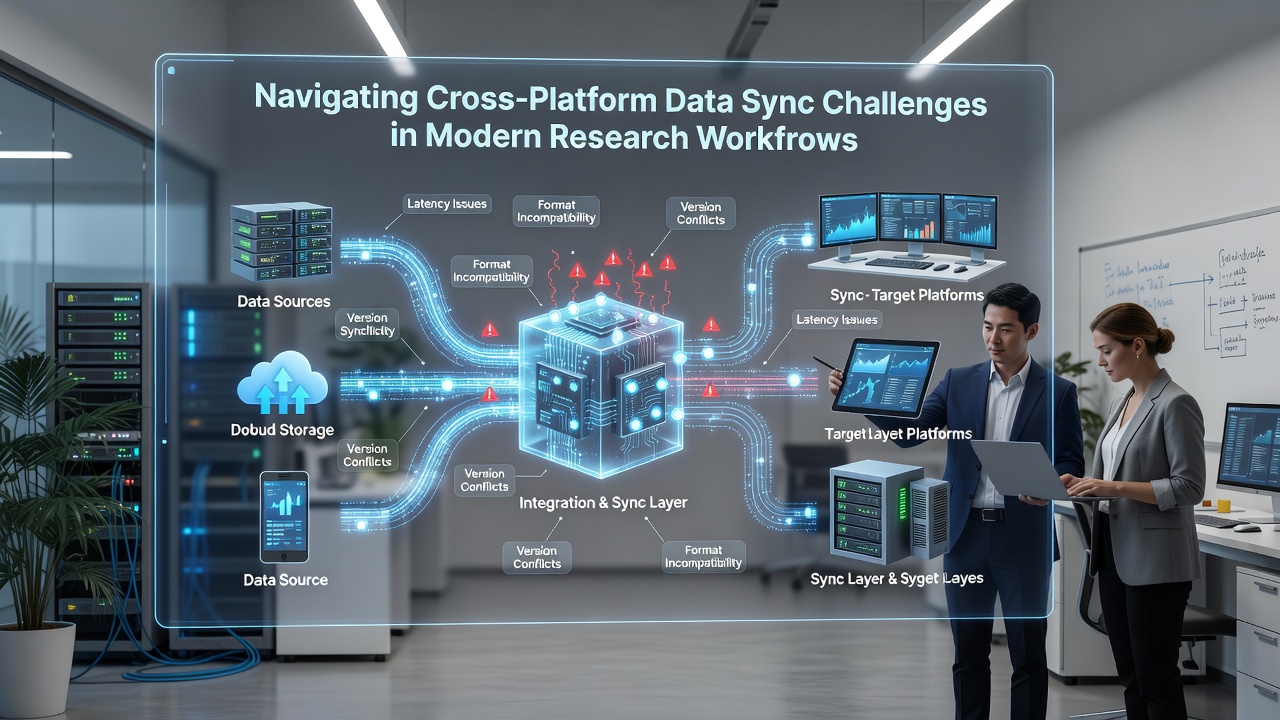
Modern research workflows depend on seamless data exchange between laboratory instruments, cloud repositories, desktop analysis suites, and mobile field applications, yet cross-platform synchronization continues to present persistent technical obstacles that affect project timelines and data integrity. Teams working across institutions frequently encounter format incompatibilities, version conflicts, and access restrictions that slow collaborative progress, and these issues have grown more pronounced as research groups adopt specialized software tailored to individual disciplines.
Core Technical Barriers in Data Synchronization
Researchers often manage datasets that originate in proprietary formats from equipment such as sequencers, spectrometers, and imaging systems before they move into general-purpose tools like spreadsheets or statistical packages, and each transition introduces potential corruption or metadata loss. Studies from institutions tracking multi-site projects show that nearly 40 percent of synchronization failures trace back to mismatched application programming interfaces or unsupported file structures, while network latency between remote servers adds further delays during peak usage periods. Observers note that security protocols required by funding agencies create additional layers of authentication that can interrupt automated sync routines, forcing manual intervention at critical stages of analysis.
Platform Diversity and Compatibility Issues
Academic and industry laboratories commonly combine open-source platforms with commercial services, including electronic lab notebooks, shared drives, and high-performance computing clusters, and this mix generates friction when data must travel between environments with differing encryption standards or permission models. Data from the National Institutes of Health indicates that projects spanning multiple universities experience an average of three major sync interruptions per month, often stemming from updates to one platform that break established connections with others. Meanwhile, field researchers relying on tablet applications for real-time collection face challenges when uploading to central servers that enforce strict schema validation, resulting in rejected entries that require reformatting back at the main facility.
Security and Compliance Considerations
Regulatory requirements around data handling differ by region and funding source, so teams must maintain audit trails while allowing collaborators in different jurisdictions to access synchronized files without violating local privacy rules. European research consortia operating under Horizon Europe guidelines report that synchronization tools must incorporate region-specific consent mechanisms, which adds configuration time and occasional mismatches when data crosses borders. In September 2026 several North American universities began piloting unified identity systems designed to streamline these processes, yet early evaluations reveal that legacy instruments still lack the necessary software hooks to participate fully in the new frameworks.
Version Control and Data Provenance
Maintaining accurate records of who modified a dataset and when becomes difficult when multiple platforms each maintain their own revision histories, and merging these logs often requires custom scripts that introduce new points of failure. Research indicates that teams using at least four distinct applications for a single project spend roughly 15 percent of their weekly effort reconciling conflicting versions, and the risk of overwriting recent changes rises sharply during simultaneous edits from different locations. Those who have implemented centralized metadata standards report fewer provenance gaps, although adoption remains uneven across disciplines that traditionally favor domain-specific tools over unified repositories.
Strategies Employed by Research Teams
Many groups now deploy middleware solutions that translate between platforms while preserving original formatting and access permissions, and these intermediaries have reduced manual reconciliation time in documented case studies from Australian and Canadian research networks. Automated monitoring scripts alert teams when sync conflicts arise, allowing rapid resolution before downstream analyses proceed with incomplete information. Training programs focused on cross-platform workflows have also emerged at several large institutions, teaching researchers to select compatible export options at the outset rather than attempting repairs after data has already fragmented across systems.
Emerging Developments and Outlook
Continued investment in standardized data exchange protocols shows promise for reducing friction, particularly as more instruments incorporate direct support for formats endorsed by international standards bodies. Projects scheduled to scale in late 2026 will test whether these advances can keep pace with growing dataset sizes and the increasing number of international collaborators. Observers tracking adoption rates note steady progress in fields that have historically faced the steepest compatibility hurdles, suggesting that incremental improvements rather than wholesale replacement of existing tools will define near-term solutions.
Conclusion
Cross-platform data synchronization remains a defining operational challenge in contemporary research environments, driven by the need to integrate specialized instruments, varied software ecosystems, and strict compliance demands. Teams that address format incompatibilities, security constraints, and version conflicts through targeted middleware and standardized practices achieve more reliable data flows, while ongoing protocol developments offer pathways toward greater interoperability in the years ahead.