
Theo Brooks · 1 November 2026
Assessing Version Control Mechanisms for Maintaining Data Integrity in Collaborative Research Platforms
Version control mechanisms track changes to files and datasets across multiple contributors, and they form a core component of data integrity strategies in collaborative research environments. These systems record every modification along with timestamps and user identifiers, which creates an audit trail that researchers rely on to verify accuracy and prevent unauthorized alterations. Centralized platforms often integrate these tools with access controls, whereas distributed approaches allow teams to maintain local copies while synchronizing updates through secure protocols.
Core Principles Behind Version Control Adoption
Research teams implement version control to address issues that arise when multiple users edit shared resources simultaneously, and this practice supports reproducibility standards required by funding agencies. Data integrity depends on features such as checksum verification, conflict resolution algorithms, and immutable history logs that detect tampering attempts. Observers note that platforms combining version control with encryption layers add another safeguard against external interference during collaborative sessions.
Distributed Systems Versus Centralized Repositories
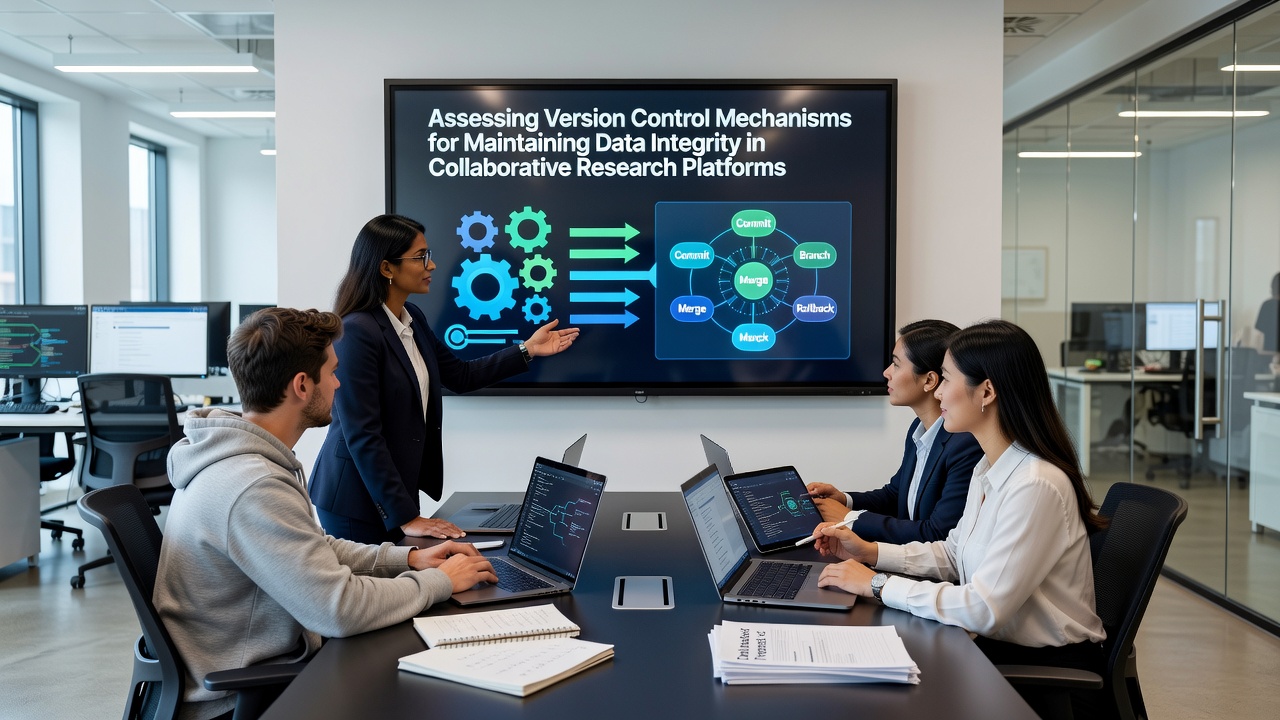
Distributed version control systems like those modeled on Git architectures enable each participant to hold a complete repository copy, which reduces single points of failure and supports offline work in field research settings. Centralized options, by contrast, store all revisions on a primary server and simplify permission management for large consortia. Studies from institutions in North America and Europe show that hybrid models often emerge when projects span international boundaries, allowing teams to balance performance with regulatory compliance needs.
Researchers frequently pair these mechanisms with metadata schemas that describe dataset provenance, and this combination helps maintain context even after numerous revisions occur. Platforms used in genomics and climate modeling have adopted such integrations because raw data volumes exceed traditional file system capacities.
Assessment Criteria for Platform Selection
Evaluations of version control tools focus on scalability metrics, audit completeness, and integration ease with existing laboratory information management systems. Metrics include average time to resolve merge conflicts, storage overhead per revision, and success rates of automated integrity checks during synchronization events. Data from Australian research networks indicates that systems supporting fine-grained access at the file level reduce accidental overwrites more effectively than coarser permission structures.
Those who evaluate platforms also examine support for large binary files common in imaging and sensor datasets, because standard text-based version control struggles with such content. Extensions that employ delta encoding or content-addressable storage address these limitations while preserving full revision histories.
Integration With Regulatory and Funding Requirements
Funding bodies such as the National Science Foundation mandate data management plans that incorporate version tracking to ensure long-term accessibility. Similar expectations appear in guidelines from the European Research Council, where collaborative projects must demonstrate mechanisms for detecting and correcting data inconsistencies. These requirements drive adoption of platforms that log every access event alongside content changes.
Implementation Patterns Across Disciplines
Life sciences teams often deploy version control within electronic lab notebooks that link experimental protocols directly to raw outputs, and this linkage allows reviewers to reconstruct entire workflows. Social science projects apply similar tools to survey datasets and qualitative coding files, where maintaining original respondent data remains essential for ethical review processes. Observers note that successful implementations include regular training sessions that familiarize new contributors with branching strategies and merge procedures.
Conclusion
Version control mechanisms continue to evolve alongside collaborative research platforms, and their effectiveness in preserving data integrity depends on careful selection matched to project scale and disciplinary needs. Ongoing assessments by research consortia highlight the value of combining technical features with clear governance policies that define roles and responsibilities for all participants.